
Are you considering whether your company needs an access control solution? There are many ways to provide and manage access control, from fobs to mobile phones. Have you considered a biometric system?
Why do you need access control?
Security is often the first consideration when it comes to access control. Are you letting only authorised people onto your premises or into certain internal locations? Has everyone safely left the building in an emergency?
It’s not only about protecting bricks and mortar. Access control also covers data, resources and individual room entry, helping an organisation to maintain cybersecurity.
What is biometric access control?
Once upon a time, opening doors using your fingerprint or via facial recognition seemed like something out of science fiction. But technology has moved on and biometric access control systems are becoming more widely used.
They work in the same way as other methods of access control in terms of permitting entry and exit. They simply allow clocking using fingerprints or facial recognition rather than physical devices like badges or fobs. The terminals do not store images and so don’t compromise personal privacy; this may be reassuring to some staff.
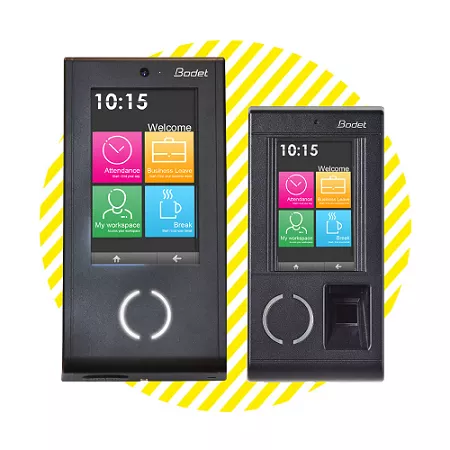
Biometric access control is suitable for multiple environments
Biometric access control is a highly secure, accurate, reliable and cost-effective solution for a business. It removes problems related to badges or fobs, particularly forgetting, losing or having them stolen. It’s quick and easy to use, so staff can get to work faster. These terminals reduce the risk of identity fraud and stop colleagues clocking in for each other. You can install biometric terminals in any work environment from an office to a warehouse. However, there might be locations where using facial recognition is preferable to fingerprints. These could include areas like workshops with a lot of dust or where workers might have dirty or oily hands.
Do you need help with choosing the right biometric system?
Kelio provides two types of biometric Time and Attendance and Access Control Systems: fingerprint scanners and facial recognition terminals. We can advise you on the most suitable solution for your business. Please contact us for a free demonstration using the link below.
I would like to discover Kelio’s biometric access control solutions
Please note: if you are considering installing a biometric recognition system, it is essential to follow GDPR guidelines. You must check the current legislation in the country where the system will be installed.


